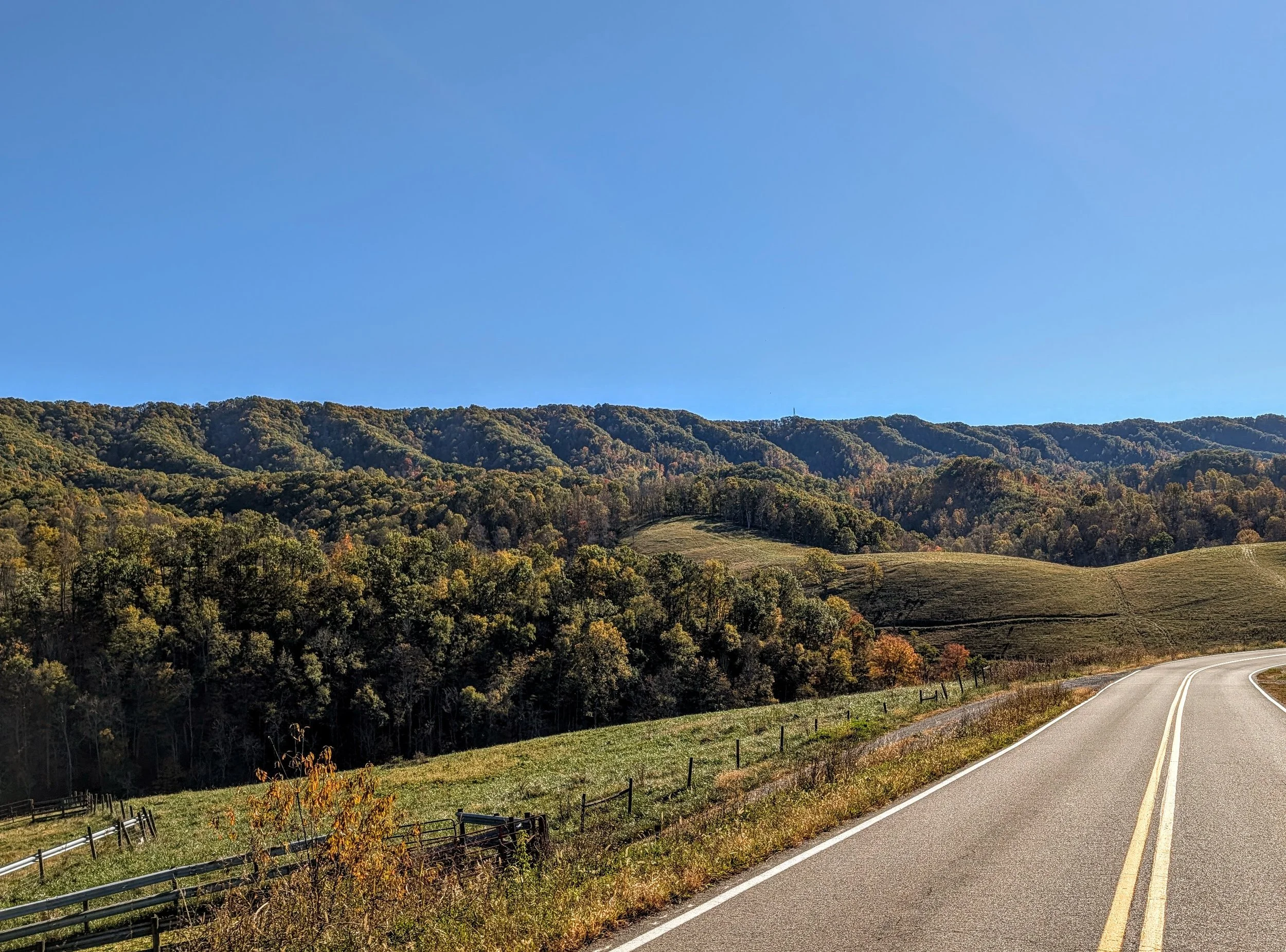
There is a particular comfort to the Appalachian Highlands corridor that runs through the Tri-Cities and up into Southwest Virginia. It is not just the mountains on the horizon or the way a downtown block can still feel human-sized. It is the practical side of life here: commutes that do not eat your day, neighborhoods where you can still know your neighbors, and a cost of living that leaves room to breathe.
If you draw a loose circle around Bristol, Kingsport, Johnson City, Abingdon, and the nearby communities that orbit them, you land in what the federal data calls the Kingsport-Bristol-Bristol, TN-VA metro area. That metro’s population was about 313,876 in 2024, and it has been trending upward year over year.
The region at a glance,
in numbers that matter
For many families, “great place to live” comes down to the intersection of earnings, housing costs, and day-to-day expenses.
On the income side, the county-level picture shows a working, middle-income region with meaningful differences by locality:
Washington County, TN median household income (2019–2023): $61,051
Sullivan County, TN median household income (2019–2023): $56,802
Washington County, VA median household income (2019–2023): $62,774
Those numbers are paired with commute times that, for a lot of people moving in from larger metros, feel like a small miracle. Washington County, TN shows a mean commute of about 21.5 minutes, and Sullivan County, TN about 21.7 minutes (2019–2023).
Real estate: affordable entry points,
with neighborhood-by-neighborhood variation
Housing is where this region often wins people over, especially buyers relocating from pricier markets. Even within the Bristol “twin city” line, prices can look different depending on which dataset you’re reading and what month it is, so it helps to compare sources.
Recent market snapshots show:
Bristol, TN: Zillow reported a median sale price of $212,333 (Nov 2025).
Bristol, VA: Zillow reported a median sale price of $215,500 (Nov 2025).
Bristol, TN: Redfin reported a median sale price around $330,000 (Dec 2025), reflecting different coverage and methodology.
The takeaway is not that one number is “right” and the other is “wrong.” It is that the Tri-Cities and its surrounding small towns are not one single market. They are a patchwork of micro-markets: historic districts, walkable pockets near downtown, lake-adjacent neighborhoods, rural acreage, and starter-home streets where demand can surge when inventory tightens.
Cost of living:
where the region quietly shines
If you want one clean way to talk about affordability that is not just “my cousin says it’s cheaper,” the Bureau of Economic Analysis uses Regional Price Parities (RPPs) to compare price levels across metros.
Bureau of Economic Analysis
For the Kingsport-Bristol metro, one widely cited summary lists an RPP around 85.354 (2023), which implies prices roughly 14 to 15 percent below the national average in that year.
Another analysis using BEA data translates that into purchasing power: in the Kingsport-Bristol metro, $100 buys about $117.16 worth of “national average” goods and services (2023).
Tax Foundation
That difference is what people feel when they move here. It is not only the mortgage payment. It is the way a normal weekend does not have to be a financial event.
Why it’s a great place to live
(beyond the spreadsheet)
Statistics explain the “why” only up to a point. The lived argument for Northeast Tennessee and Southwest Virginia is that the region offers a rare mix: access to real work, real amenities, and real landscape, without asking you to trade away your time and peace.
Healthcare is one of the backbone sectors, and Ballad Health is regularly described as the region’s largest employer and healthcare provider. That matters because it stabilizes a regional economy in a way that smaller towns often struggle to do.
Then there is the cultural and event gravity. Bristol Motor Speedway is not just a racetrack, it is an economic engine that regularly pulls national attention into the region, including major events that bring meaningful visitor spending.
And finally, there is the lifestyle that does not show up neatly in a table: four-season scenery, quick access to trails and rivers, historic downtowns with buildings that still have stories in the brick, and a rhythm of life that can be busy when you want it to be and quiet when you need it to be.
Bottom line
Northeast Tennessee and Southwest Virginia are compelling because they remain, in a very practical sense, livable. Population is growing at the metro level, commutes stay manageable, and affordability measures based on federal price data show a region that stretches a household dollar further than the national average. Add in steady employment anchors and real estate that still offers attainable entry points, and it becomes easy to see why people put down roots here.